

Key takeaways
- El péptido de cobre puede ayudar a calmar el aspecto de la rojez cosmética, la que se ve después de lavarte, del sol o de un producto fuerte, dentro de una rutina suave.
- En estudios de laboratorio el GHK-Cu mostró acciones antioxidantes y antiinflamatorias, pero eso no es lo mismo que probar que un sérum quite la rojez.
- Redness depends a lot on what sets it off: sun, heat, hot water, wind, cold and some products are common triggers.
- Si la rojez no se va, viene con granitos, ardor o vasitos visibles, consulta a una dermatóloga: puede ser una condición que un sérum no resuelve.
¿Péptido de cobre y rojeces? El péptido de cobre puede ayudar a calmar el aspecto de la rojez cosmética, la que aparece después de lavarte con agua caliente, de un día de sol o de un producto que te cayó fuerte. No es una solución para una condición médica: si la rojez es constante o viene con otros síntomas, lo que toca es ir a la dermatóloga.
Aquí te contamos qué se sabe del péptido de cobre, qué suele provocar la rojez y cómo armar una rutina tranquila para la piel que se enrojece con facilidad.
Qué es el péptido de cobre y qué se sabe sobre la rojez
El péptido de cobre (GHK-Cu) es una molécula pequeña formada por tres aminoácidos unidos a cobre. Se usa en cosmética desde hace décadas, sobre todo en sérums para el aspecto de la textura y la firmeza.
En estudios de laboratorio y en animales, el GHK-Cu mostró acciones antioxidantes y antiinflamatorias. Es una pista interesante, pero esos estudios no son pruebas hechas con un sérum en la cara de personas, así que no permiten decir que quite la rojez.1
Lo que sí puedes esperar de un buen sérum de péptido de cobre es que se sienta suave, que no arda y que ayude a que la piel se vea más calmada como parte de una rutina sencilla.
Cosmetic redness or something more: how to tell
Not all redness is the same. Knowing which kind you have helps you decide whether adjusting your routine is enough or whether you should get it checked.
Temporary redness
It comes and goes: after a hot shower, exercise, time in the sun or cold, or using an exfoliant. It usually settles within a while once you remove what caused it.
Redness from irritation
It comes with tightness, burning or flaking, often after starting a strong product or using too many actives at once. The first step here is to simplify your routine and let your skin recover.
Redness that won't go away
If your face looks red most of the time, you flush very easily, or you notice fine visible veins, bumps or burning, it may be rosacea. It's a condition diagnosed by a health professional, and it doesn't improve with over-the-counter breakout products.2
What usually sets off redness

Every skin has its own triggers, and learning yours helps more than any product. These are some of the most common:2
- Sun and heat.
- Very hot water on your face or long, hot baths.
- Wind and cold.
- Spicy foods, alcohol and hot drinks.
- Stress and intense exercise, especially in the heat.
- Some skin products, like those with alcohol, strong fragrance or exfoliants.
A useful idea: for a couple of weeks, jot down when your face turns red and what you were doing. Often the pattern shows up on its own.
The season matters too. In winter, cold air outside and indoor heating can leave skin tight and redder; in summer, heat and sun do their part. Adjusting your routine to the season, with a slightly richer moisturizer in the cold and more shade in the heat, usually helps more than adding products.
Cómo usar el péptido de cobre si tu piel se enrojece
Before using it on your whole face, do a patch test: a few drops on a small area, then wait 24 hours. If you notice no burning or new redness, you can start.
In the morning
- Wash your face with lukewarm water and a gentle cleanser, using your fingertips and without scrubbing.
- Aplica 3 o 4 gotas del sérum de péptido de cobre sobre la piel limpia, en cara y cuello.
- Follow with a simple moisturizer.
- Finish with broad-spectrum sunscreen every day.
At night
- Clean your face with the same gentle cleanser and pat it dry.
- Aplica 3 o 4 gotas del sérum.
- Seal with your moisturizer.
If you use retinol, acids or pure vitamin C, keep them for another time of day and, if your skin turns red easily, think about whether you really need them right now. The fewer strong actives, the easier it is to know what agrees with your skin.
For the rest of your routine, choose simple products: a gentle cleanser that doesn't leave skin tight, a moisturizer without strong fragrance and a sunscreen you find comfortable, since the best one is the one you actually use every day. If a product stings when you put it on, even a little, set it aside. And apply everything with clean hands, patting rather than rubbing.
Common mistakes with red skin
- Scrubbing your face with sponges, brushes or exfoliants to get rid of redness.
- Using astringent or alcohol-based toners, which can dry and irritate skin.
- Trying many new products at once: if something irritates you, you won't know which one.
- Skipping sunscreen on cloudy days or at home by the window.
- Keeping on with a product that stings, thinking your skin will get used to it.
The American Academy of Dermatology recommends washing your face gently with your fingertips, choosing alcohol-free products and avoiding astringents, toners and exfoliants that irritate. These tips are meant for breakout-prone skin, but they also work for skin that turns red.3
When to see a dermatologist
Book an appointment if redness lasts most of the day, if it comes with bumps, burning or visible little veins, if your eyes bother you, or if it doesn't improve even after simplifying your routine and watching your triggers. A professional can tell you what it is and what your options are.2
Si ya tienes un diagnóstico, pregúntale a tu dermatóloga antes de sumar un sérum nuevo. Un cosmético puede acompañar sus indicaciones, no reemplazarlas. Lleva el producto o una foto de su etiqueta a la consulta: así es más fácil que te diga si encaja con lo que ya usas.
Frequently asked questions
¿El péptido de cobre quita la rojez?
It can help calm the look of cosmetic redness within a gentle routine, but it doesn't make it go away or replace watching your triggers. If redness is constant, see a dermatologist.
¿Puedo usar péptido de cobre si tengo rosácea?
Ask your dermatologist first, since rosacea is a medical condition and every skin reacts differently. If they give you the go-ahead, start with a patch test.
¿Y si el sérum me pone la piel más roja?
Suspéndelo. Un sérum que arde o deja rojez nueva no te está cayendo bien, y no es algo que haya que aguantar. Vuelve a lo básico unos días y, si no mejora, consulta.
Can I combine it with niacinamide?
Yes, they can go in the same routine, applying the lighter one first. If your skin is very reactive, add them one at a time to see how it responds to each.
¿El sérum Pepfine lleva ácidos?
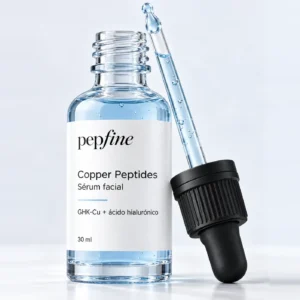
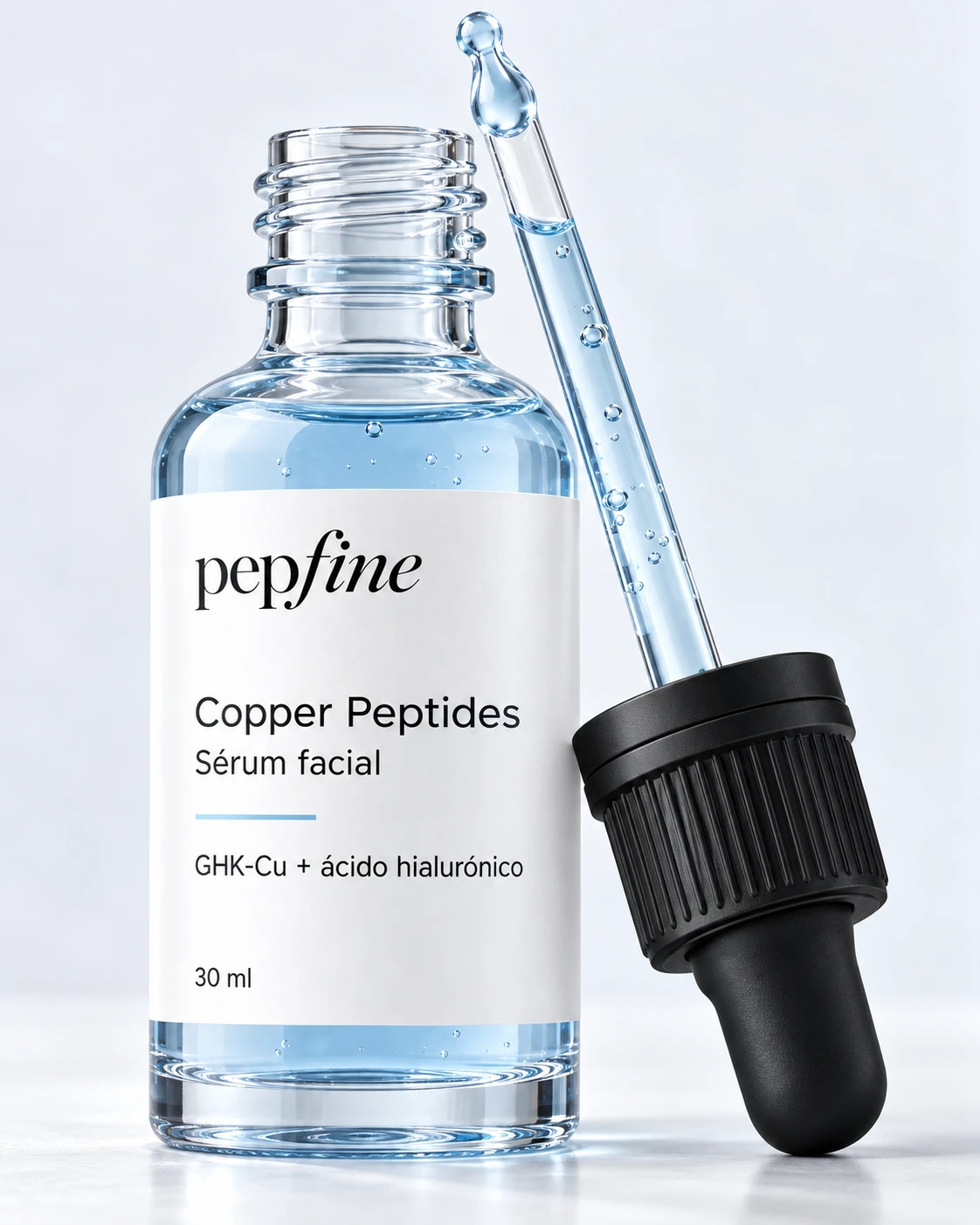
No. Lleva péptido de cobre (GHK-Cu) y ácido hialurónico, sin ácidos exfoliantes. Se aplican 3 o 4 gotas mañana y noche, antes de la crema, evitando el contorno de los ojos.
 ✦✦✧✦