

Key takeaways
- No: los sérums con péptido de cobre son cosméticos, y en Estados Unidos los cosméticos no pasan por una aprobación previa de la FDA.
- Not being "approved" doesn't mean no one oversees them: the company is responsible for safety and the FDA can act if a product breaks the law.
- What decides whether something is a cosmetic or a drug is its intended use, meaning what it promises.
- Be wary of any cosmetic that boasts FDA backing or promises to fix diseases.
¿Qué tienen que ver el péptido de cobre y la FDA? Mucha gente pregunta si la FDA lo aprueba. La respuesta corta es que no hace falta, y no es una mala señal: los sérums con péptido de cobre son cosméticos, y en Estados Unidos los cosméticos y sus ingredientes no necesitan aprobación de la FDA antes de venderse, salvo los colorantes.1
Eso no quiere decir que no tengan reglas. En esta guía te explicamos qué significa que un producto sea cosmético o medicamento, qué sí exige la ley, qué cambió con la ley de 2022 y qué revisar antes de comprar un producto con péptido de cobre.
¿La FDA aprueba el péptido de cobre?
La FDA explica que su autoridad sobre los cosméticos es distinta de la que tiene sobre los medicamentos o los dispositivos médicos. Los medicamentos necesitan aprobación antes de salir a la venta; los cosméticos no. Por eso ningún sérum cosmético con péptido de cobre, incluido el nuestro, tiene una aprobación de la FDA: ese paso no existe para los cosméticos.1
What does apply is that, except for color additives and prohibited or restricted ingredients, a manufacturer may use an ingredient in a cosmetic as long as the product is safe under its labeled conditions of use and properly labeled.1
The exception: color additives
Dentro de los cosméticos, los colorantes son la excepción: sí necesitan aprobación de la FDA antes de usarse. Además, hay ingredientes prohibidos o con restricciones que no se pueden usar libremente. El péptido de cobre no es un colorante, así que entra en la regla general: la empresa responde por que su fórmula sea segura y esté bien etiquetada.1
Cosmetic or drug: intended use decides
Under U.S. law, a cosmetic is a product for cleansing, beautifying, promoting attractiveness or altering the appearance. A drug, by contrast, is a product meant to diagnose, mitigate or prevent disease, among other medical uses, or to affect the structure or a function of the body.2
The FDA notes that what decides a product's category is its intended use, and that this use can be seen in what the label, advertising and website say. The same ingredient can be in a cosmetic or a drug: what changes is what the product promises.2
Products that are both
Algunos productos son cosmético y medicamento a la vez, como un champú anticaspa o un humectante con protector solar. En ese caso llevan una etiqueta de medicamento con sus ingredientes activos. Un sérum de péptido de cobre que solo habla de la apariencia de la piel es un cosmético.2
Un ejemplo con el péptido de cobre
Un sérum que dice que ayuda a que la piel se vea más suave y uniforme está hablando de apariencia, así que es un cosmético. Si el mismo sérum dijera que sana heridas o que resuelve un problema de la piel, estaría prometiendo un uso de medicamento, y tendría que cumplir las reglas de los medicamentos. Por eso, al leer una etiqueta o un anuncio, fíjate más en lo que promete que en el ingrediente.2
If there's no approval, who ensures safety?
The company that makes or sells a cosmetic has the legal responsibility to make sure it's safe. The law doesn't require specific tests for each product or ingredient, but it does require safety to be substantiated. The FDA, for its part, can act against products on the market that break the law, collect samples during inspections and follow up on complaints.1
The law prohibits selling adulterated cosmetics, for example ones with harmful substances or made in unsanitary conditions, and misbranded cosmetics.1
Recalls
When a cosmetic poses a hazard, the company usually removes it from the market voluntarily. The FDA monitors those recalls and can request one if a company won't pull a dangerous product.1
What the FDA doesn't do
The FDA doesn't work as a private testing lab or recommend labs to test products. It also doesn't review every formula before it reaches the store. That's why it helps so much that you also know how to read a label: what it promises, the ingredient list and who is responsible for the product tell you a lot about who you're buying from.1
What changed with the 2022 law (MoCRA)
The Modernization of Cosmetics Regulation Act of 2022 is the biggest expansion of the FDA's authority over cosmetics since 1938. It didn't create premarket approval, but it did add obligations for companies.3
- Registering the facilities where cosmetics are made and renewing the registration.
- Listing each product with the FDA, including its ingredients.
- Reporting serious adverse events to the FDA.
- Keeping records that support each product's safety.
For you as a shopper, this means the FDA now has more information about which cosmetics are sold, where they're made and which serious reactions are reported, even though there's still no approval before sale.
Also, the label must show the person responsible for the product: the manufacturer, packer or distributor.3
Qué revisar antes de comprar un producto con péptido de cobre
- That it talks about how skin looks, not about diseases.
- That it doesn't boast FDA backing: a cosmetic doesn't go through that approval.
- Que tenga la lista completa de ingredientes; el péptido de cobre aparece como «copper tripeptide-1».
- That it says who is responsible for the product and how to contact them.
- That the safety seal is intact.
If a product promises medical changes, it's probably presenting itself as something it isn't. Also compare what the box says with what the website or ads say: if one talks about appearance and the other promises much more, it's best to be skeptical. And if something causes a reaction, stop using it.
If a cosmetic causes a reaction
Stop using it, keep the container with its label and lot number, and see a dermatologist if the reaction is strong or doesn't go away. You can also let the company know using the contact details on the label: under the 2022 law, the person responsible for the product must report serious adverse events to the FDA.3
Frequently asked questions
¿La FDA aprueba el péptido de cobre?
No, and it doesn't need to be: in the U.S., cosmetics and their ingredients, except color additives, don't need premarket approval. That doesn't mean there are no rules.1
Is a cosmetic that boasts FDA backing more trustworthy?
Quite the opposite: since cosmetics don't go through FDA approval, claiming it is a sign to look at the product more carefully.1
¿Por qué mi sérum no tiene «Drug Facts»?
Because it's a cosmetic. The "Drug Facts" label and the active ingredients list are for over-the-counter drugs or products that are also drugs.2
¿El Sérum Pepfine es un medicamento?
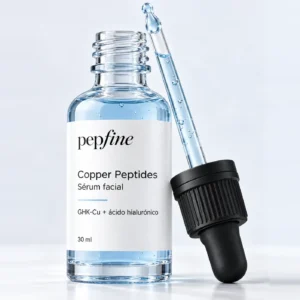
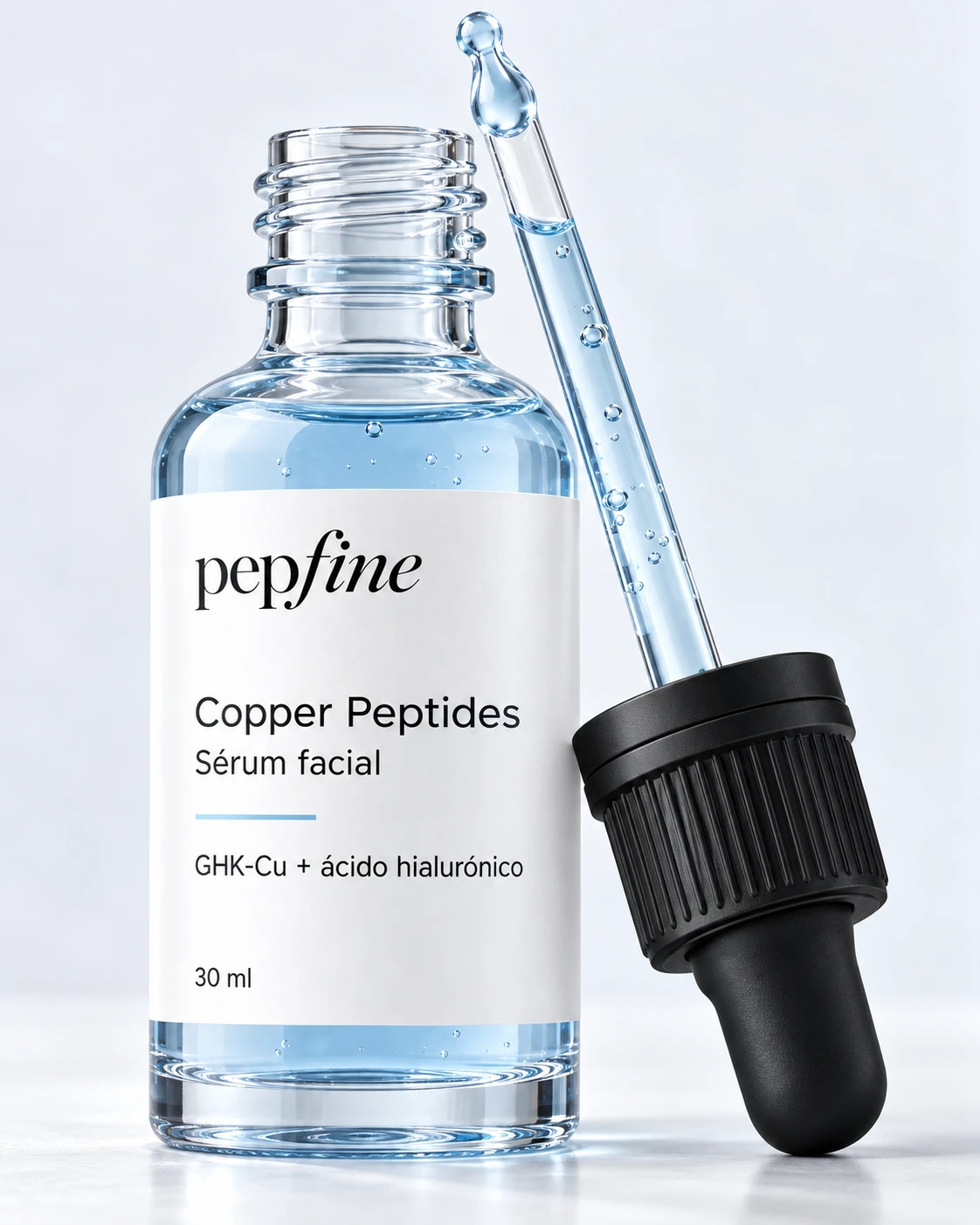
No. Es un cosmético con péptido de cobre (GHK-Cu) y ácido hialurónico, sin ácidos exfoliantes, pensado para el cuidado de la apariencia de la piel.
Sources
- FDA Authority Over Cosmetics: How Cosmetics Are Not FDA-Approved, but Are FDA-Regulated — U.S. Food and Drug Administration (2025)
- Is It a Cosmetic, a Drug, or Both? (Or Is It Soap?) — U.S. Food and Drug Administration (2024)
- Modernization of Cosmetics Regulation Act of 2022 (MoCRA) — U.S. Food and Drug Administration (2026)
 ✦✦✧✦