

Key takeaways
- The flat marks a breakout leaves aren't scars and usually fade over time; a routine helps them look lighter.
- Sunscreen comes first: without it, every other step does much less.
- Ingredients like vitamin C, azelaic acid or retinol can help, but add them one at a time.
- If a product burns or stings, stop using it: irritation can leave new marks.
How do you fade acne marks? The breakout is gone, but it left a brown, reddish or purple mark that's still there weeks later. It's very common and there's a reason for it. The good news is that these marks usually fade over time, and a consistent, gentle routine helps them look lighter without irritating your skin.
In this guide we explain why they stay, the morning and night routine step by step, which ingredients usually help, how to add them without irritation and which products are best avoided.
Why marks stay after a breakout
When a pimple gets inflamed, skin can produce extra melanin, the substance that gives it color, in that spot. That's why a flat mark remains when the breakout clears. Its color depends on your skin tone: on lighter skin it's usually red or pink, and on medium or darker skin, brown, sometimes bluish gray.2
These marks aren't scars: the skin's texture stays smooth. If you feel a small dip or bump when you run your finger over it, that's something else, and we explain it in our guide to marks versus scars.2
What makes them last longer
Over time, many marks fade on their own, though it can take a while. What makes them last longer is inflaming the area again: squeezing pimples, using products that irritate and, above all, the sun. The American Academy of Dermatology explains that a product that irritates the skin can also leave dark spots.1
The routine, step by step
In the morning
- A gentle cleanser, without scrub particles, applied with your fingertips.
- Un sérum que te ayude a emparejar el tono.
- A light moisturizer.
- Broad-spectrum sunscreen, SPF 30 or higher, every day even when it's cloudy.
At night
- Remove makeup and cleanse gently.
- Tu sérum: 3 o 4 gotas son suficientes.
- A moisturizer to care for your skin barrier.
The AAD suggests gently washing your face up to twice a day and after sweating, with a non-abrasive cleanser applied with your fingertips, and avoiding products that irritate, such as astringents, toners and harsh exfoliants.3
Sunscreen: the step that counts most
The AAD calls sunscreen essential: applied before going outside to all skin clothing won't cover, it can help prevent new dark spots and clear existing ones. For dark spots it recommends a tinted sunscreen with iron oxide, because it also protects against visible light.1
- Reapply it every two hours and after swimming or sweating.
- Wear a wide-brimmed hat when you're outside.
- If you can, avoid strong sun between 10 a.m. and 2 p.m.
Iron oxide appears in the sunscreen's list of inactive ingredients, so look for it there. If your skin is oily, choose one that says "non-comedogenic."1
Ingredients that usually help
The AAD explains that once you protect your skin from the sun and stop what's causing the dark spots, a product that evens out skin tone tends to work better. Among the ingredients it mentions for fading dark spots are azelaic acid, glycolic acid, kojic acid, retinol and vitamin C.1
- Niacinamide: is usually very well tolerated and is used to help tone look more even.
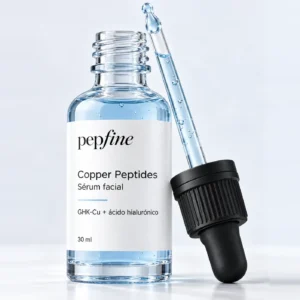
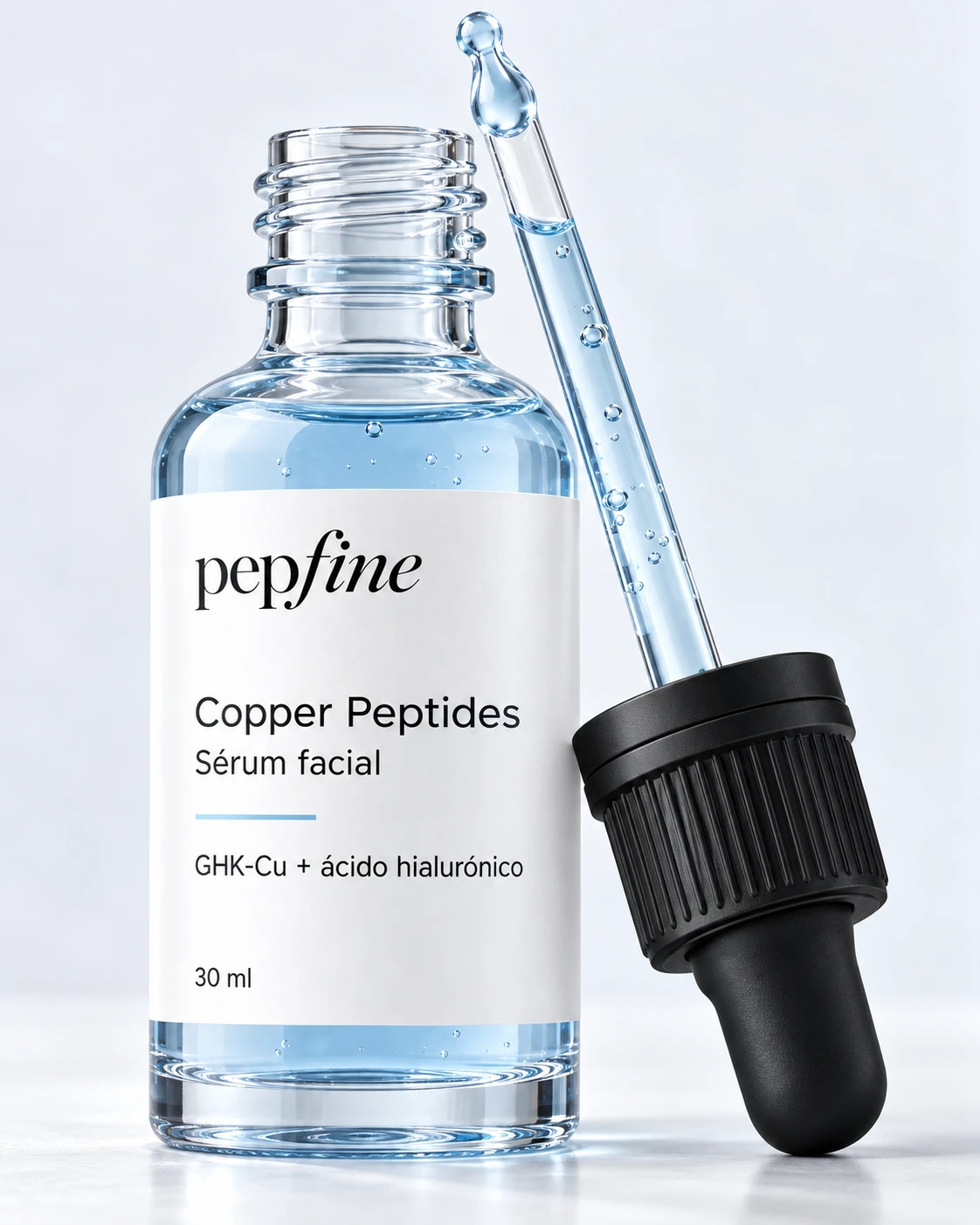
- Péptidos como el de cobre (GHK-Cu): apoyan una piel de apariencia más uniforme sin pelar.
- Vitamin C: adds radiance; if your skin is sensitive, look for gentler forms.
- Azelaic acid, glycolic acid and retinol: useful, but best added gradually.
On niacinamide, a 2024 review explains that it helps block pigment from passing to the skin's surface cells, and describes it as a very well-tolerated ingredient.4
How to add actives without irritation
Más activos no es mejor. Agrega uno a la vez y úsalo varios días antes de sumar otro. Si quieres un exfoliante químico suave o retinol, empieza de noche, pocas veces por semana, y nunca en noches en que tu piel esté irritada. No los juntes con el péptido de cobre en el mismo momento: déjalos para noches distintas.
The AAD recommends choosing gentle products, often labeled "for sensitive skin" or "fragrance-free," and stopping a product if it burns or stings when you apply it. If your skin reacts easily, do a patch test first.1
How to tell if it's working
Take a photo on day one, in the same spot, with the same natural light from the front and the same angle. Repeat every few weeks and compare the photos to each other. Change is usually gradual, so the daily mirror is misleading. If new marks appear instead of fading, check whether a product is irritating you.
What to avoid
- Squeezing or picking pimples and scabs.
- Scrubs with particles or harsh brushes.
- Putting things on your face that aren't meant for skin, like lemon or baking soda.
- Lightening creams of doubtful origin or without a clear ingredient list.
The AAD warns that imported products for fading dark spots have been found to contain harmful ingredients such as mercury that weren't on the label. Buy products with a complete label and clear origin, and never use bleach on your skin.1
Frequently asked questions
Do breakout marks go away on their own?
Many fade over time, especially if no new breakouts appear in the area and you protect yourself from the sun. A gentle routine helps them look lighter.2
¿Puedo usar vitamina C y péptido de cobre?
Sí, pero en momentos distintos. Una opción sencilla es la vitamina C en la mañana y el péptido de cobre en la noche.
When should I see a dermatologist?
If your routine isn't giving you the result you want, if you keep getting breakouts or if a spot changes shape or color without a breakout before it. Some marks need products that only a dermatologist can recommend.1
¿El Sérum Pepfine lleva ácidos?
No. Lleva péptido de cobre (GHK-Cu) y ácido hialurónico, sin ácidos exfoliantes. Se aplican 3 o 4 gotas mañana y noche sobre la piel limpia, antes de la crema.
Sources
- How to fade dark spots in darker skin tones — American Academy of Dermatology
- Acne scars: Signs and symptoms — American Academy of Dermatology
- Acne: Tips for managing — American Academy of Dermatology
- Mechanistic Insights into the Multiple Functions of Niacinamide: Therapeutic Implications and Cosmeceutical Applications in Functional Skincare Products — Antioxidants, PMC (2024)

 ✦✦✧✦