


Key takeaways
- Hyaluronic acid is a molecule that holds on to water and helps skin feel hydrated, soft and plump.
- It's called an acid, but it doesn't exfoliate: you can use it morning and night, even on sensitive skin.
- The trick is to apply it to slightly damp skin and seal it with a moisturizer on top.
- Combina con casi todo; si tu sérum también lleva péptido de cobre, la vitamina C pura y el retinol van en otro momento del día.
Hyaluronic acid is one of the best-known ingredients, but also one of the most misused. It's a molecule that holds on to water and helps skin feel hydrated; to make it really work, apply it to slightly damp skin and seal it with a moisturizer on top.
Here's what it is, why it's called an acid if it doesn't exfoliate, how to use it morning and night, what it pairs with and the most common mistakes.
What is hyaluronic acid?
Hyaluronic acid is the key molecule in skin moisture, thanks to its unique ability to hold on to water. Your body already makes it: the skin holds about half of all the hyaluronic acid in the body, mostly in the dermis.1
Con el paso del tiempo y el desgaste de todos los días, la piel pierde humedad. Por eso el ácido hialurónico se volvió un ingrediente tan común en sérums y cremas: ayuda a que la piel se sienta más hidratada, suave y jugosa.1
On ingredient lists it may appear as hyaluronic acid or as sodium hyaluronate, a form widely used in skincare.
Why is it called an acid if it doesn't exfoliate?
Because of its chemical structure, not because of what it does on skin. Unlike glycolic, lactic or salicylic acid, hyaluronic acid isn't meant to peel the skin or remove dead cells. Its job is to attract and hold water.
- It doesn't exfoliate or cause flaking.
- It can be used morning and night.
- It generally feels comfortable, even on sensitive skin.
- It pairs with most ingredients in your routine; during the day, sunscreen is still a must.
How to use hyaluronic acid so it actually hydrates
Hyaluronic acid draws in water, so it works best when there's water nearby. These are the two tweaks that make the biggest difference:
- Apply it to slightly damp skin, not completely dry: after washing your face, pat dry and leave skin just slightly damp.
- Always seal it with a moisturizer on top, so the moisture stays in your skin.
It's the same logic the American Academy of Dermatology recommends for dry skin: apply moisturizer while skin is still damp, for example right after a shower. That organization includes hyaluronic acid among the ingredients worth looking for in a moisturizer for dry skin.2
En climas muy secos o en invierno, la crema encima es todavía más importante. Si tu piel se siente tirante al rato, cambia a una crema más rica en lugar de poner más gotas de sérum.
A hyaluronic acid routine, morning and night
In the morning
- Cleanse your face with a gentle cleanser or lukewarm water.
- Pat dry and leave skin just slightly damp.
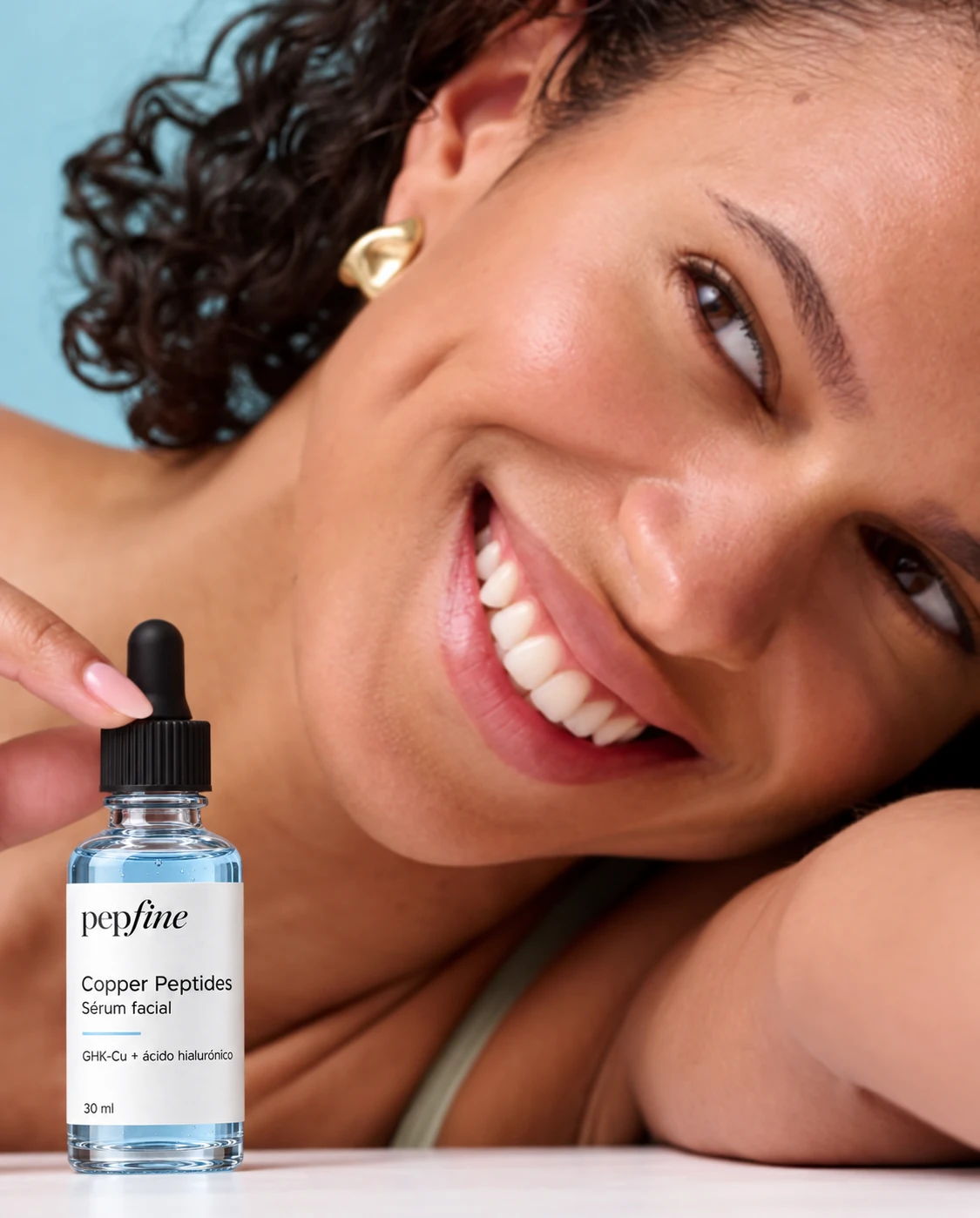
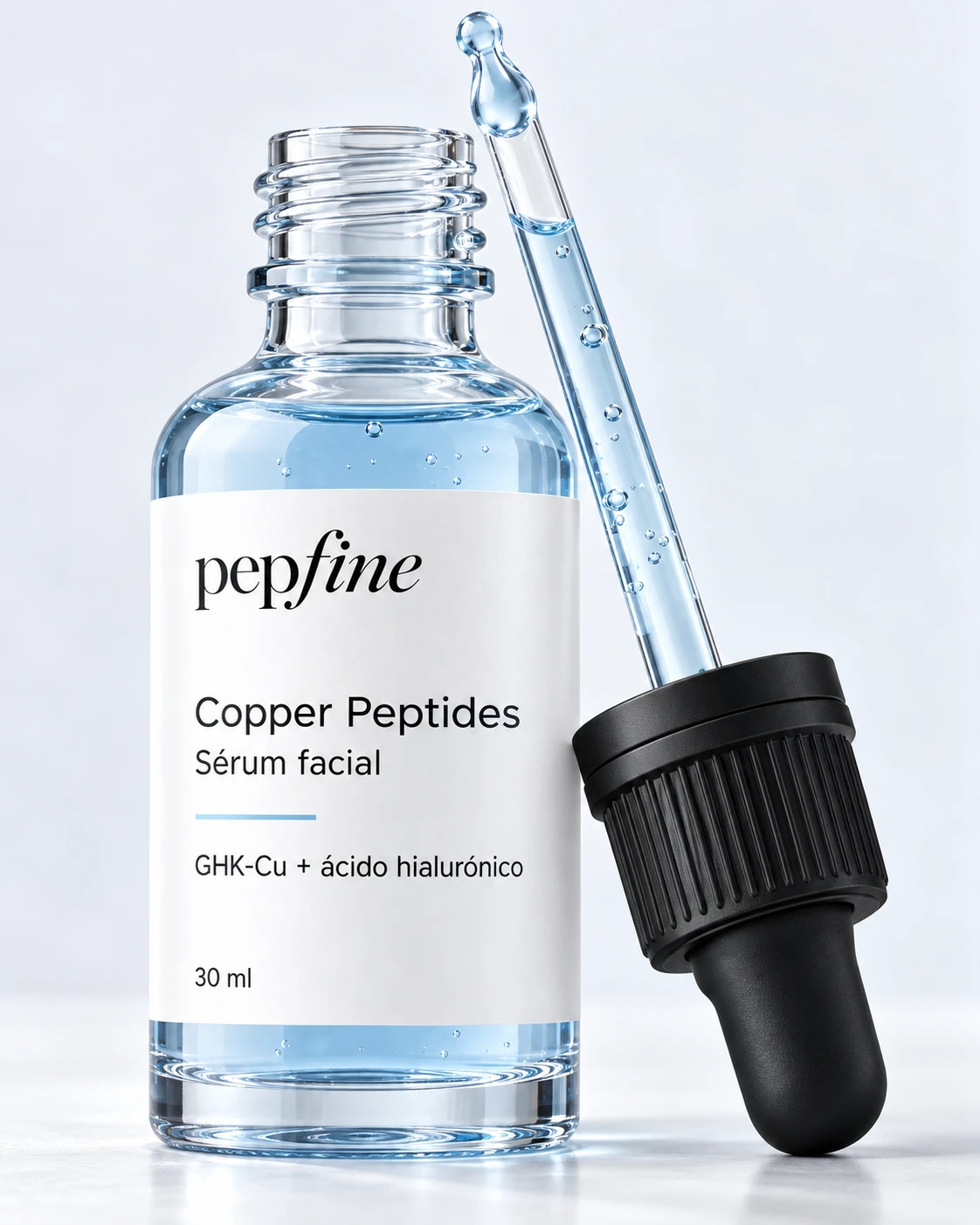
- Aplica tu sérum con ácido hialurónico. Con el Sérum Pepfine, 3 o 4 gotas en cara y cuello, evitando el contorno de ojos.
- Seal with your moisturizer.
- Finish with sunscreen.
At night
- Remove sunscreen and makeup, and cleanse your face.
- Con la piel apenas húmeda, aplica el sérum.
- Seal with a moisturizer, slightly richer than your morning one if your skin is dry.
No olvides el cuello: reparte lo que sobra en las manos hacia abajo, con movimientos suaves. Y si usas tónico o esencia, van antes del sérum; la piel húmeda que dejan es un buen momento para aplicar el ácido hialurónico.
What hyaluronic acid pairs with
El ácido hialurónico combina con casi todo: péptidos, niacinamida, ceramidas, vitamina C y retinol. Por eso muchos sérums lo usan como base, junto con otro ingrediente principal.
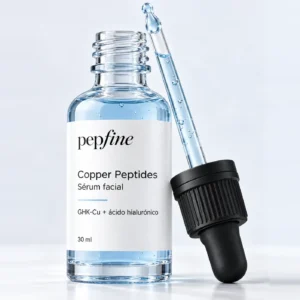
Lo que hay que revisar es qué más lleva tu sérum. El Sérum Pepfine, por ejemplo, junta ácido hialurónico con péptido de cobre (GHK-Cu); por el péptido de cobre, la vitamina C pura, los ácidos exfoliantes y el retinol van en otro momento del día.
- Mañanas: limpiador, sérum con ácido hialurónico y péptido de cobre, crema y protector solar.
- Retinol nights: cleanser, retinol and moisturizer.
- Las demás noches: limpiador, sérum y crema.
How to choose a hyaluronic acid product
- Look for hyaluronic acid or sodium hyaluronate on the ingredient list.
- Choose fragrance-free formulas, especially if your skin is dry or sensitive.
- Elige la textura según tu piel: un sérum ligero para piel mixta o grasa, y una crema más rica encima si tu piel es seca.
- Check what other actives it contains, so you know what not to combine it with.
The fragrance-free advice comes from the American Academy of Dermatology, which suggests looking for fragrance-free on the label, not just unscented.2
Common mistakes with hyaluronic acid
- Applying it to completely dry skin and putting nothing on top.
- Skipping moisturizer in dry weather.
- Using more drops thinking it'll hydrate more: a small amount spread evenly is enough.
- Applying it over moisturizer instead of under it.
- Olvidar que el sérum puede llevar otros activos que no conviene mezclar.
Frequently asked questions
Does hyaluronic acid go before or after moisturizer?
Antes. El sérum con ácido hialurónico va sobre la piel limpia y apenas húmeda, y la crema encima lo sella.
Does hyaluronic acid exfoliate?
No. It's called an acid because of its chemical structure, but its job is to hold water, not peel skin. That's why it can be used morning and night.
Can I use hyaluronic acid with retinol?
El ácido hialurónico por sí solo combina bien con el retinol. Si tu sérum también lleva péptido de cobre, como el Sérum Pepfine, usa el retinol en otro momento del día.
How many times a day can I use hyaluronic acid?
Lo habitual es mañana y noche, como parte de tu rutina. Sigue las indicaciones de tu producto: con el Sérum Pepfine, 3 o 4 gotas en cada momento, sobre la piel limpia y antes de la crema.
Is hyaluronic acid good for oily skin?
Yes. Oily skin needs hydration too, and hyaluronic acid usually comes in light textures that don't feel heavy. Pair it with a light moisturizer on top.

 ✦✦✧✦