

Key takeaways
- There's no single best time to take omega-3: what helps most is taking it at the same time each day and as the label says.
- If you get a fishy taste or heartburn, try it with a meal and check what your label says about food.
- Swallow softgels whole: don't split, chew or open them.
- If you're allergic to fish or shellfish, take medication or are pregnant, ask first.
When should you take omega-3? There's no single best time for everyone. What helps most is choosing a moment you can repeat every day and following what your product's label says. In this guide we explain how to pick that moment, whether to take it with food and what to do when you miss one.
You'll also see how to swallow softgels, where to keep the bottle so it stays in good shape and when it's worth asking your doctor or pharmacist first. If you'd like to understand EPA and DHA first, we have a separate guide on how to read an omega-3 label.
Is there a best time to take omega-3?
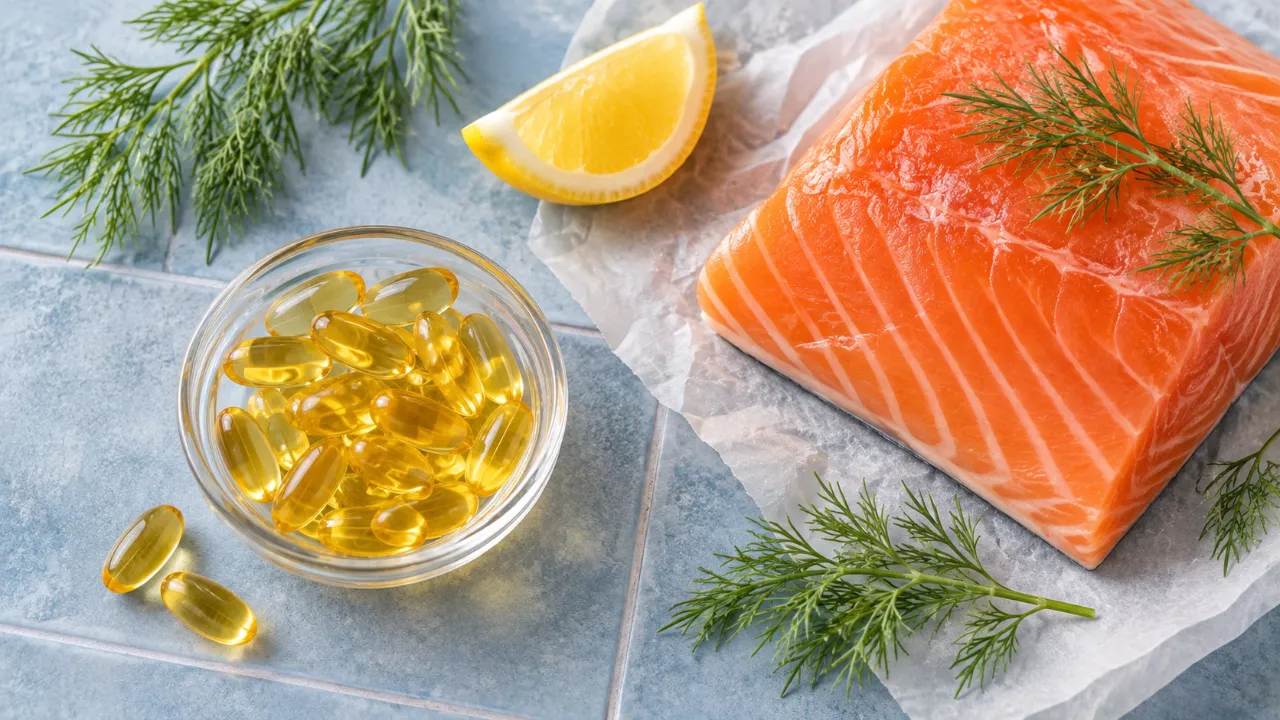
Los omega-3 son un tipo de grasa que está en algunos alimentos y en el cuerpo, y también se venden como suplemento. El EPA y el DHA vienen sobre todo de los pescados de agua fría, como el salmón, la macarela y el atún, de los mariscos y del aceite de pescado.1
MedlinePlus's page on over-the-counter omega-3 softgels says to take them as the package directs and at around the same time, or times, each day. In other words, consistency matters more than the clock: pick the time you won't skip.2
How to choose your moment
- With breakfast, if you eat breakfast at the same time most days.
- With lunch or dinner, if you rush out in the morning and forget.
- Next to another fixed habit, like the glass of water you drink when you get home.
- Always the same: changing the time each day makes it easier to skip.
Si te dieron una indicación concreta de horario, sigue esa. Y si tomas varios suplementos, no hace falta tomarlos todos juntos: puedes repartirlos entre las comidas para que te sea más fácil recordarlos.
With or without food?
It depends on your product. On the same MedlinePlus page, some omega-3 products are meant to be taken with food and others with or without it. So the first step is to read your label's directions and follow them.2
If your label leaves it up to you, a meal can be a good anchor. Many people remember their softgel better when they leave it next to the meal they always have at the same time, and the routine builds itself.
If you get a fishy taste or heartburn
Las molestias del omega-3 en suplemento suelen ser leves. Entre ellas están el mal sabor, el mal aliento, el sudor con mal olor, el dolor de cabeza y molestias del estómago como agruras, náuseas o diarrea. MedlinePlus también menciona eructos y cambios en el sentido del gusto.1
If it happens, first check that you're taking it as the label says. If your product can be taken with food, try it with your main meal. And if any discomfort is strong or doesn't go away, stop taking it and tell your doctor.2
How to swallow softgels
MedlinePlus's guide says to swallow the softgels whole, without splitting, crushing, chewing or dissolving them. If you have trouble swallowing capsules, mention it to your doctor or pharmacist before looking for another way to take them.2
- Check how many softgels make up a serving in the label's table.
- Read the directions: how many times a day and whether it goes with food.
- Take it whole, with a glass of water.
- Don't take more servings than the label says.
In Pepfine Omega-3 the serving is one softgel in all four options. What changes between them is how much EPA and DHA that softgel contains, and that's written in the table.
If you use more than one product with omega-3
Check the labels of everything you take. Some multivitamins and other formulas also contain fish oil or EPA and DHA. If you're combining several, tell your pharmacist so they can help you see whether taking them together makes sense.
If you miss a dose
Take it as soon as you remember. But if it's almost time for the next one, skip the one you missed and keep your usual schedule. Don't take double to make up for it.2
So you don't miss it, leave the bottle where you'll see it at the time you chose: by the coffee maker, on the table where you eat breakfast or next to your toothbrush, as long as it isn't a damp spot.
Where to store it
Keep it in its original bottle, tightly closed and out of reach of children. Leave it at room temperature, away from heat and moisture, and not in the bathroom. The same page says not to freeze these softgels, so there's no need to put them in the freezer.2
Check the expiration date now and then and don't use it if the safety seal was broken. If the softgels look or smell very different, ask where you bought it.
Who should check with a doctor first
Antes de empezar, avisa a tu médica y a tu farmacéutico si tienes alergia al pescado o a los mariscos, como camarón, langosta, cangrejo, ostión o mejillón. También diles qué otros medicamentos, vitaminas y suplementos tomas.2
- If you're pregnant, trying to get pregnant or breastfeeding.
- If you take prescription medication or have a medical condition.
- If you're going to have surgery.
- If it's for a child.
Los suplementos pueden interactuar con algunos medicamentos o ser un riesgo si tienes ciertas condiciones o vas a tener una cirugía. Además, muchos no se han probado en embarazadas, en mamás que dan pecho ni en niñas y niños.3
Omega-3 from food counts too
Un suplemento no sustituye una alimentación variada. Las guías de alimentación de Estados Unidos recomiendan que las personas adultas coman al menos unos 225 g de pescados y mariscos variados a la semana, incluyendo algunos con más EPA y DHA. Si estás embarazada o das pecho, la recomendación es de 225 a 340 g a la semana, eligiendo opciones bajas en mercurio.1
Frequently asked questions
Is it better to take omega-3 in the morning or at night?
There's no better time for everyone. Pick the one you can repeat every day, follow your label's directions and, if it sits better with food, take it with the meal you always have at the same time.
Can I open or chew an omega-3 softgel?
No. The direction is to swallow it whole, without splitting, chewing or dissolving it. If you have trouble swallowing capsules, ask your doctor or pharmacist.2
Should omega-3 go in the fridge or the freezer?
Follow what your label says. As a general rule, keep it at room temperature, tightly closed, away from heat and moisture, and don't freeze it.2
Can I take omega-3 if I'm allergic to shellfish?
Ask your doctor first. A fish or shellfish allergy is one of the things to mention before taking a marine omega-3.2
Which omega-3 does Pepfine have?
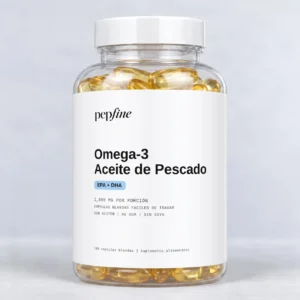
Pepfine Omega-3 EPA + DHA comes in softgels, in four options: 1,000 mg fish oil with 300 mg EPA + DHA, 1,100 mg Premium with 640 mg, 1,000 mg Omega 800 with 800 mg, and 1,250 mg Alaskan with 1,040 mg. In all of them the serving is one softgel.
 ✦✦✧✦