

Key takeaways
- Pair well together: hyaluronic acid, niacinamide, simple moisturizers, other peptides and sunscreen.
- Best at another time of day: exfoliating acids, retinol and pure vitamin C.
- If something is prescribed, ask your dermatologist before adding copper peptide.
- The golden rule: one new product at a time and few strong actives per routine.
What can you mix with copper peptides? They go well with gentle ingredients like hyaluronic acid, niacinamide, simple moisturizers and sunscreen. Exfoliating acids, retinol and pure vitamin C are best used at another time of day. And if anything in your routine is prescribed, ask first.
This is a quick guide to check whenever you're unsure. For each combination we tell you whether it goes together, whether it's best kept apart or whether you should ask, with the reason in one line.
The cheat sheet
Go well together
- Hyaluronic acid: hydrates and doesn't exfoliate.
- Niacinamide: usually very well tolerated.
- Simple moisturizers and ceramides: help skin feel comfortable.
- Other peptides, such as signal peptides.
- Sunscreen: always, by day.
Best at another time of day
- Exfoliating acids, like glycolic or salicylic.
- Retinol.
- Pure vitamin C (ascorbic acid).
- Cosmetic azelaic acid.
Ask first
- Any prescription product, such as tretinoin.
- If you're pregnant or breastfeeding and use retinoids.
- If you have a diagnosed skin condition.
This guide is about everyday cosmetic products. If a product is prescribed, your dermatologist decides how to use it, even if it shows up on one of these lists. And if a serum already contains several ingredients together, use it as its label directs: the formula is already designed to go that way.
What goes well together, and why
Hyaluronic acid is one of the skin's main components and holds a lot of water, which is why it's used to hydrate. Its most common form in cosmetics is sodium hyaluronate. It doesn't exfoliate, so it pairs easily with copper peptide.1
Niacinamide is a form of vitamin B3. A 2024 review describes it as very well tolerated by the skin and explains that it supports ceramide production, which is part of the barrier. It can go in the same routine as copper peptide.2
Other peptides, like signal peptides, usually get along too: many serums already contain several. And sunscreen goes on top of everything, every morning.1
Check what each product already contains
Before adding a serum, read the ingredient list of what you already use. Look for "copper tripeptide-1" for copper peptide, "sodium hyaluronate" or "hyaluronic acid" for hyaluronic acid and "niacinamide" for niacinamide. If your moisturizer already contains one, you may not need another product with the same thing.
What's best kept apart, and why
It isn't that they "cancel out." The reason to keep them apart is that these ingredients can irritate, and if you combine them with other actives at the same time, irritation adds up and it's hard to tell what didn't suit you.
Alpha hydroxy acids, like glycolic acid, can increase skin's sensitivity to the sun. The FDA recommends sunscreen, protective clothing and limiting sun while using them and for the following week.3
Retinol is an over-the-counter retinoid. The American Academy of Dermatology notes that retinoids shouldn't be used during pregnancy and that on darker skin irritation can leave dark marks, so it's best to start slowly and use moisturizer.4
How to keep them apart in practice
What about azelaic acid?
Cosmetic azelaic acid is one of the ingredients used to make dark spots look lighter, and it can cause itching or dryness. Treat it like the other actives on this list: at another time of day or on different nights from copper peptide.
- Vitamin C in the morning and copper peptide at night.
- Acid or retinol nights without copper peptide.
- The other nights: cleanser, copper peptide and moisturizer.
How to combine in the same routine
When you use products that go well together in the same routine, order helps each one go on comfortably. The simple rule is from lightest to richest.
- Gentle cleanser.
- Copper peptide serum, which is usually watery.
- Niacinamide or another serum, if it's thicker.
- Moisturizer.
- By day, sunscreen.
Wait a few seconds between layers so each one settles. If two products have the same texture, it doesn't matter much which goes first. What does matter is not using more product than needed: 3 or 4 drops of serum is usually enough for the face, and adding more doesn't make it work better.
A sample week
- Every morning: cleanser, vitamin C or niacinamide, moisturizer and sunscreen.
- Two or three nights: cleanser, your acid or retinol and moisturizer.
- The other nights: cleanser, copper peptide, niacinamide if you like it and moisturizer.
It's just a starting point. If your skin is comfortable, keep it; if it gets irritated, leave more nights with only copper peptide and moisturizer.
Combinations by skin type
Dry skin
Lean on hydration: copper peptide with hyaluronic acid and a richer cream on top. If you use strong actives, keep them to a few nights a week, and apply the serum to slightly damp skin.
Oily skin
Copper peptide with niacinamide and a gel moisturizer usually feels light. There's no need to skip moisturizer: choose a light texture instead of leaving it out.
Sensitive skin
Less is more. Start with just copper peptide, moisturizer and sunscreen, and add one new ingredient at a time after a few comfortable days. Choose fragrance-free products and patch test before each one.
Common mistakes when combining
- Starting several products on the same day.
- Using many strong actives on the same night.
- Thinking that if it stings, it's "working."
- Forgetting sunscreen when you use acids or retinol.
- Repeating the same ingredient across several products without noticing.
If you notice burning that doesn't go away, tightness, flaking or new redness, go back to basics for a few days: gentle cleanser, moisturizer and sunscreen. Then reintroduce one product at a time. If your skin reacts easily, patch test before each new product.
When to ask a dermatologist
If irritation is strong or doesn't go away, if you have a diagnosed skin condition or if you use something prescribed, it's best to ask before you keep combining. Bring a list of what you use, with photos of the labels, so they can see all the ingredients together.
Frequently asked questions
Can I mix copper peptide with vitamin C?
Yes, but better at different times. A simple option is vitamin C in the morning and copper peptide at night.
Can I use copper peptide with niacinamide?
Yes. They can be used in the same routine, morning or night; apply the lighter texture first and wait a few seconds.
What about retinol or acids?
Better on different nights or at another time of day, so irritation doesn't add up. And if your retinoid is prescribed, ask your dermatologist.
Does the Pepfine Serum already include a combination?
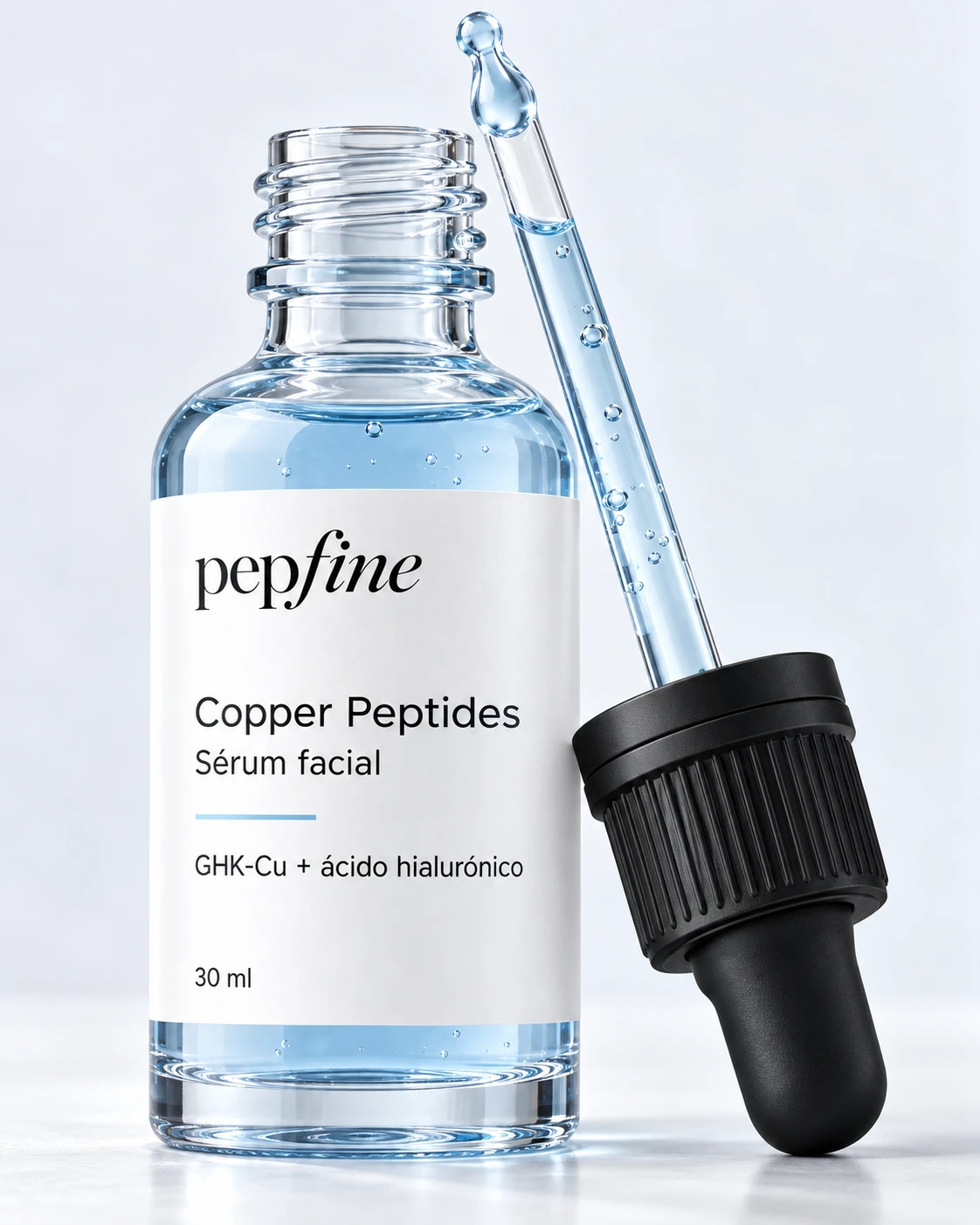
Yes: it pairs copper peptide (GHK-Cu) with hyaluronic acid, with no exfoliating acids. Apply 3 or 4 drops morning and night to clean skin, before moisturizer.



 ✦✦✧✦