

Key takeaways
- En la lista de ingredientes, el péptido de cobre aparece como «copper tripeptide-1».
- Ingredients go from most to least, but those at 1% or less can be listed in any order.
- Por eso la posición del péptido en la lista no te dice su porcentaje exacto.
- Also check the directions, warnings, who is responsible for the product and how to store it.
¿Cómo leer la etiqueta de un sérum de péptido de cobre? Lo primero es buscar el nombre del ingrediente, «copper tripeptide-1», en la lista. Lo segundo es saber que esa lista va de mayor a menor cantidad, con una excepción importante para los ingredientes que se usan en cantidades pequeñas, como los péptidos.
In this guide we explain which names to look for, what the label does and doesn't tell you about amounts, what other parts are worth checking and how to store the bottle so it keeps well.
The names you'll find
En la lista de ingredientes, el péptido de cobre (GHK-Cu) aparece como «copper tripeptide-1». Es un péptido transportador: una cadena de tres aminoácidos unida a cobre. Si en la lista ves otros péptidos con «palmitoyl» o «acetyl» delante, son de otros grupos, con otra función.3
- Copper tripeptide-1: el péptido de cobre.
- Sodium hyaluronate or hyaluronic acid: hyaluronic acid, which helps hydrate.
- Glycerin: another ingredient that helps hold water.
- Water o aqua: agua, casi siempre el primer ingrediente de un sérum.
The FDA requires cosmetic ingredients to be listed by their established names. That's why you'll see them in English or under their technical name, even if the rest of the label is in Spanish.1
If your skin is sensitive
Also notice what you're not looking for. If you know fragrance irritates you, check whether "fragrance" or "parfum" appears. If a product ever gave you a reaction, write down its ingredient list and compare it with the new one: sometimes the same ingredient repeats under a different brand name.
What the ingredient order tells you
Under FDA labeling rules, cosmetic ingredients are listed from most to least. But there's an exception: color additives and ingredients at 1% or less can be listed without following that order.1
Esto importa con los péptidos, porque suelen usarse en cantidades pequeñas. Que el péptido de cobre aparezca más arriba o más abajo en la lista no te dice su porcentaje exacto. Puede estar después de un conservador o de un perfume y eso no significa que haya «muy poco».1
What about the concentration?
A cosmetic label isn't required to show each ingredient's percentage. Some brands share it and others don't. If a brand does, take it as one more piece of information, not the only measure of quality: the full formula, the packaging and how you use it also count. Be careful comparing percentages across brands: two products with the same number can feel very different on skin because of the rest of the formula, and a higher percentage doesn't always mean it suits your skin better, especially if it's sensitive.
An example to practice
Imagina una lista que empieza con agua, glicerina y ácido hialurónico, sigue con un conservador y termina con copper tripeptide-1. Lo que sabes con seguridad es que el agua es lo que más hay. Lo que no puedes saber es si el péptido está al 0.1 % o al 1 %: al estar en cantidades pequeñas, la marca puede ordenarlo libremente entre los últimos. Por eso, más que contar posiciones, fíjate en que el ingrediente que buscas esté presente y en que el resto de la fórmula sea sencilla.
What a cosmetic label shouldn't promise
Un sérum de péptido de cobre es un cosmético: su función es limpiar, embellecer o cambiar la apariencia. Si la etiqueta promete resolver enfermedades o cambiar cómo funciona el cuerpo, se está presentando como medicamento. Los productos que son cosmético y medicamento a la vez, como algunos con protector solar, llevan primero sus «ingredientes activos».4
Un sérum que solo habla de cómo se ve la piel, como más suave o con un tono más parejo, está en el terreno del cosmético. Desconfía de las promesas médicas y de los cambios enormes en pocos días.
Phrases that sound good but say little
Words like "clinical," "medical grade" or "lab formula" aren't official categories for a cosmetic. They don't mean the product is better or worse; they just mean it's worth going back to the ingredient list, the directions and who is responsible for the product, which is where the useful information is.
Other parts of the label worth checking
- The net contents, for example 30 ml, to work out how long it lasts.
- The directions: how many drops, what time of day and where not to apply it.
- The warnings: patch test, eye area, pregnancy or breastfeeding.
- The name and address of whoever sells or makes it.
- The lot number and, if there is one, the expiration date.
The FDA requires the label to state the name and place of business of the company selling the product. If the distributor isn't the manufacturer, that has to be stated too.1
Expiration and how to store it
In the U.S. there's no law requiring an expiration date on cosmetics. The FDA explains that heat can make preservatives break down and bacteria and fungi grow faster, and recommends not leaving cosmetics in hot places, like a car in the sun.2
- Close the bottle tightly after each use.
- Keep it in a cool, dry place, away from direct sun.
- Don't touch the dropper tip with your fingers or skin.
- If it changes a lot in color, smell or texture, don't use it.
The FDA also warns that temperature changes, sunlight and air can change a product's color, texture or smell, and that products resold online may be old, used or fake.2
Cómo se ve esto en el Sérum Pepfine
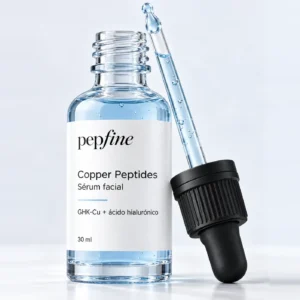
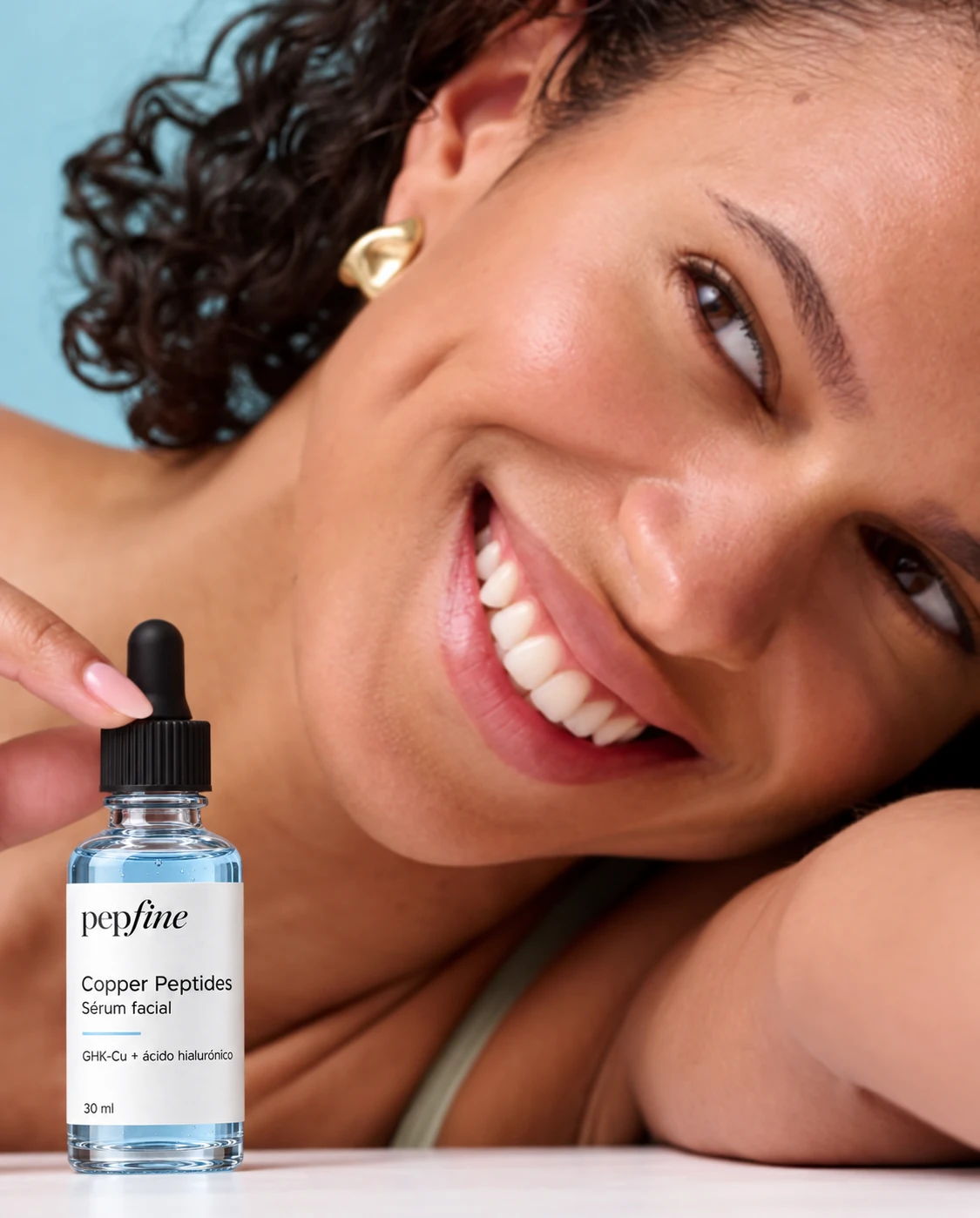
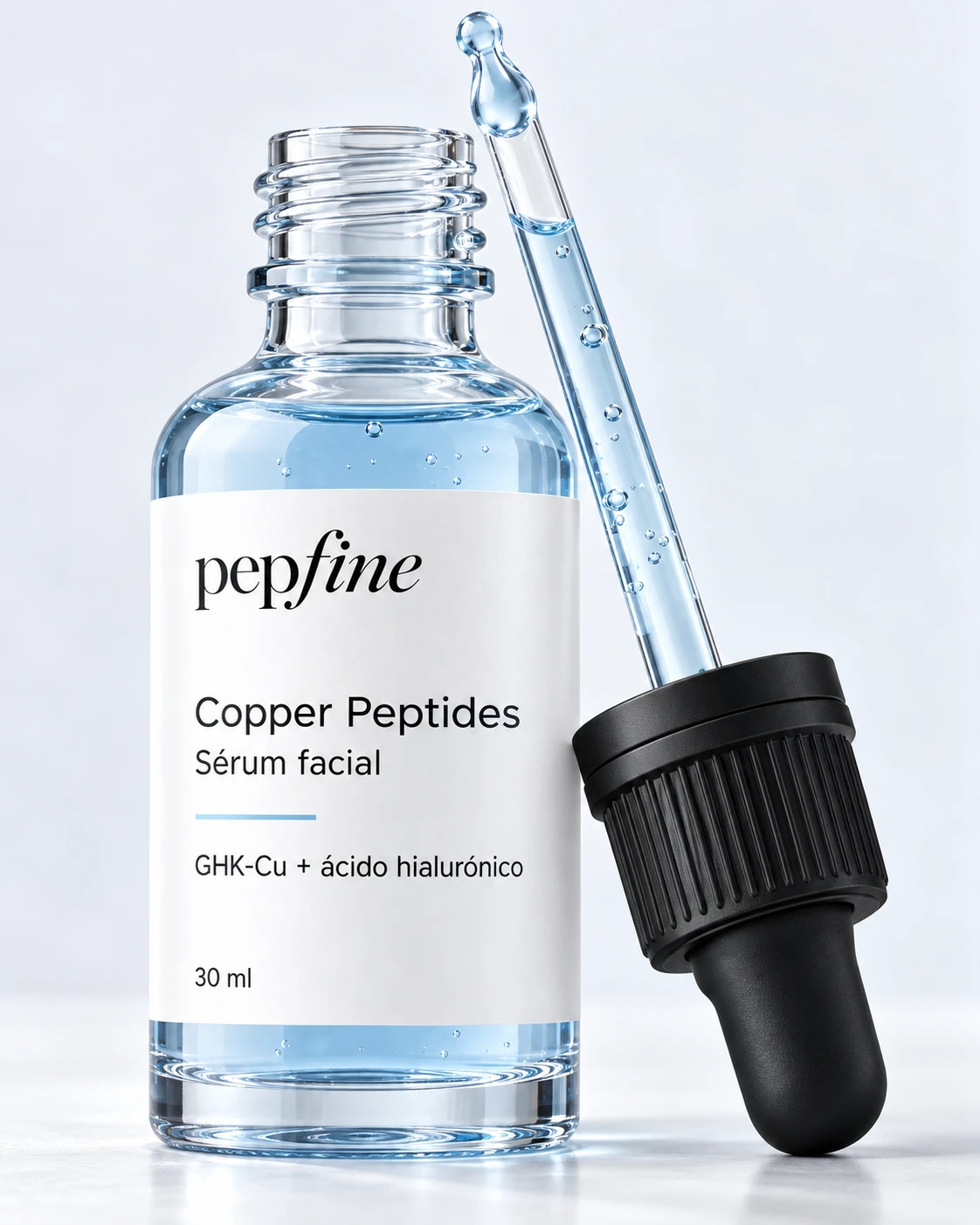
El Sérum Pepfine es un cosmético de uso externo con péptido de cobre (GHK-Cu) y ácido hialurónico, sin ácidos exfoliantes. Cada frasco trae 30 ml, que rinden alrededor de un mes con el uso recomendado: 3 o 4 gotas en la cara y el cuello, mañana y noche, evitando el contorno de ojos.
Its warnings say to try it first on a small area for 24 hours, stop if you feel burning or irritation, ask first if you're pregnant or breastfeeding, and keep it tightly closed in a cool, dry place, not in the car or next to the shower.
Frequently asked questions
¿Cómo aparece el péptido de cobre en la lista de ingredientes?
Como «copper tripeptide-1». Es el nombre del ingrediente que se conoce como GHK-Cu.3
Si el péptido de cobre está al final de la lista, ¿tiene muy poco?
No necesariamente. Los ingredientes al 1 % o menos pueden ir en cualquier orden, y los péptidos suelen usarse en cantidades pequeñas. Su posición no te dice el porcentaje exacto.1
¿Mi sérum tiene que traer fecha de caducidad?
In the U.S. it isn't required. Even so, keep it tightly closed, away from heat, and stop using it if it changes a lot in color, smell or texture.2
¿El Sérum Pepfine lleva ácidos?
No. Lleva péptido de cobre (GHK-Cu) y ácido hialurónico, sin ácidos exfoliantes. El ácido hialurónico se llama «ácido», pero no exfolia.
Sources
- Summary of Cosmetics Labeling Requirements — U.S. Food and Drug Administration (2025)
- Shelf Life and Expiration Dating of Cosmetics — U.S. Food and Drug Administration (2022)
- Overview of popular cosmeceuticals in dermatology — Skin Health and Disease, PMC (2024)
- Is It a Cosmetic, a Drug, or Both? (Or Is It Soap?) — U.S. Food and Drug Administration (2024)
 ✦✦✧✦