

Key takeaways
- Azelaic acid appears in over-the-counter cosmetics and also in prescription medications; if yours is prescribed, your dermatologist decides how to use it.
- Con un azelaico cosmético, el péptido de cobre puede caber en tu rutina, pero lo habitual es no aplicarlos al mismo tiempo.
- Add one product at a time and patch test: azelaic acid can cause itching, burning or dryness.
- Sunscreen every day, especially if you want dark spots to look lighter.
¿Se pueden usar el péptido de cobre y ácido azelaico en la misma rutina? Depende de qué ácido azelaico uses. Si es un cosmético de venta libre, el péptido de cobre puede caber, casi siempre en otro momento del día. Si es un medicamento de receta, cómo usarlo y con qué combinarlo te lo indica tu dermatóloga.
In this guide we explain what each one is, how to tell whether your azelaic acid is cosmetic or prescription, how to fit them without overloading your skin and which signs mean it's time to pause.
What each one is
Azelaic acid is one of the ingredients the American Academy of Dermatology lists for fading dark spots, along with glycolic acid, kojic acid, retinol and vitamin C. The AAD explains it can be found in over-the-counter products.1
El péptido de cobre (GHK-Cu) es un péptido transportador: una cadena corta de aminoácidos unida a cobre. En cosmética se usa para mejorar la apariencia de líneas finas y tono disparejo. No es un ácido y no exfolia.3
The AAD explains these ingredients can help fade existing dark spots and, in some cases, slow down the production of melanin, which gives them their color. They work best once you're already protecting your skin from the sun and have stopped what causes the spots.1
Cosmetic or medication
Azelaic acid also comes in prescription creams, gels and foams, used for skin conditions a doctor diagnoses. If your product was prescribed, or its label says it's a medication, don't combine it with anything new without asking. If it's a cosmetic, the general idea of this article applies.2
How to recognize them on the label
En la lista de ingredientes, el ácido azelaico aparece como «azelaic acid» y el péptido de cobre como «copper tripeptide-1». Si un producto trae los dos, ya viene combinado: úsalo como indica su etiqueta y no le sumes otro producto con el mismo ingrediente.
Can you combine them?
No hay una razón conocida por la que el péptido de cobre y el ácido azelaico se «cancelen». Lo que sí puede pasar es que la piel se irrite si juntas varios activos a la vez. La ficha de MedlinePlus menciona que el ácido azelaico puede causar picor, ardor, escozor, hormigueo, sensibilidad y resequedad en la zona donde se aplica.2
That's why the calmest way to use them is to keep them apart: one in the morning and the other at night, or on different nights. That way, if something irritates you, you know which one it was, and each product gets its own space. Once your skin is used to both, you can calmly decide whether to keep that setup or adjust it, always paying attention to how your skin feels.
How to fit them into your routine
If your azelaic acid is cosmetic, follow the directions on its label. A simple setup many routines use is this:
- Mañana: limpiador suave, sérum de péptido de cobre, crema hidratante y protector solar.
- Night: gentle cleanser, your azelaic acid product as its label directs and moisturizer.
Si prefieres el péptido de cobre en la noche, puedes alternar: unas noches con azelaico y otras con péptido de cobre. Lo importante es no aplicarlos uno encima del otro mientras tu piel se acostumbra.
How to start
- Add one product at a time and use it for several days before adding the other.
- Patch test each one: a few drops behind the ear or on the jawline, and wait 24 hours.
- Use a gentle cleanser and avoid alcohol-based cleansers, astringents and exfoliants.
- Don't add other acids or retinol while you're trying this combination.
For azelaic acid, MedlinePlus recommends avoiding alcohol-based cleansers, tinctures, abrasives, astringents and peeling products. It's a good rule for any routine with actives.2
If you also use vitamin C or retinol
Más activos no es mejor. Si ya tienes vitamina C, retinol o algún exfoliante en tu rutina, no los sumes todos a la vez que el azelaico y el péptido de cobre. Elige los que más te importan, repártelos entre la mañana y la noche, y deja algunas noches solo con limpiador e hidratante para que la piel descanse.
If your skin is sensitive
Start with the product you care about most and give it time before adding the second. Use a simple, fragrance-free moisturizer and avoid very hot water. If your skin feels sensitive one day, skip the actives that day and keep only cleanser, moisturizer and sunscreen.
Signs to pause
- Burning or stinging that doesn't fade after a short while.
- New dryness, tightness or flaking.
- Changes in skin color where you apply it.
- Swelling, hives or rash.
If you notice burning or dryness, go back to basics for a few days: gentle cleanser, moisturizer and sunscreen. If you get facial swelling, hives or a rash, stop using the product and seek medical care right away.2
If your skin is brown or dark
MedlinePlus warns that azelaic acid can change skin color, especially on darker skin, and asks you to tell your doctor if you notice it. If your skin is brown, watch for any lightening or darkening where you use it.2
Pregnancy and breastfeeding
MedlinePlus asks you to tell your doctor if you're pregnant, planning to become pregnant or breastfeeding while using prescription azelaic acid. If any of these applies to you, ask before adding any new active to your routine.2
Sunscreen is still key
If you use azelaic acid to make dark spots look lighter, sunscreen is what protects that effort most. The AAD calls it essential: applied before going out to all skin not covered by clothing, it helps prevent new spots and clear existing ones.1
For dark spots, the AAD also recommends a tinted sunscreen with iron oxide, SPF 30 or higher, broad-spectrum and water-resistant, and wearing a wide-brimmed hat outdoors.1
Patience with dark spots
Dark spots fade gradually. Switching products every week or adding more actives to speed things up tends to irritate skin, and irritation can leave new spots. Take photos in the same light every few weeks and compare them to each other.1
Frequently asked questions
¿Puedo aplicar péptido de cobre y ácido azelaico juntos?
The calmest approach is to keep them apart: one in the morning and the other at night, or on different nights. If your azelaic acid is prescribed, ask your dermatologist.
Which goes first if I use them on the same day?
If you use them at different times, the order doesn't matter. If your dermatologist told you to use them together, follow their direction; otherwise, apply the lighter texture first.
Does azelaic acid make skin peel?
It can cause dryness, itching or burning in some people. If your skin peels or burns in a way that doesn't go away, pause and ask.2
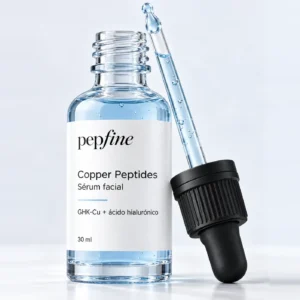
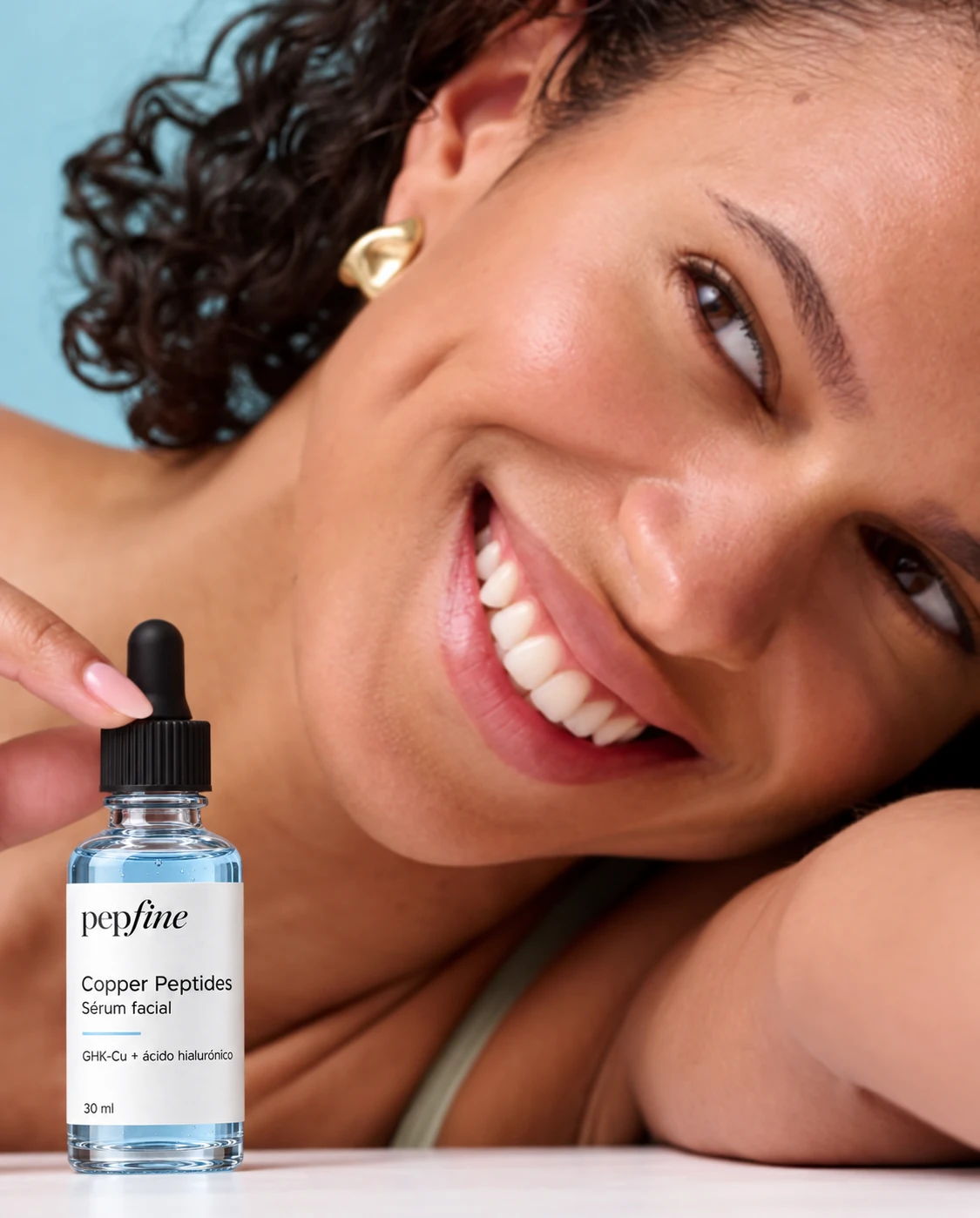
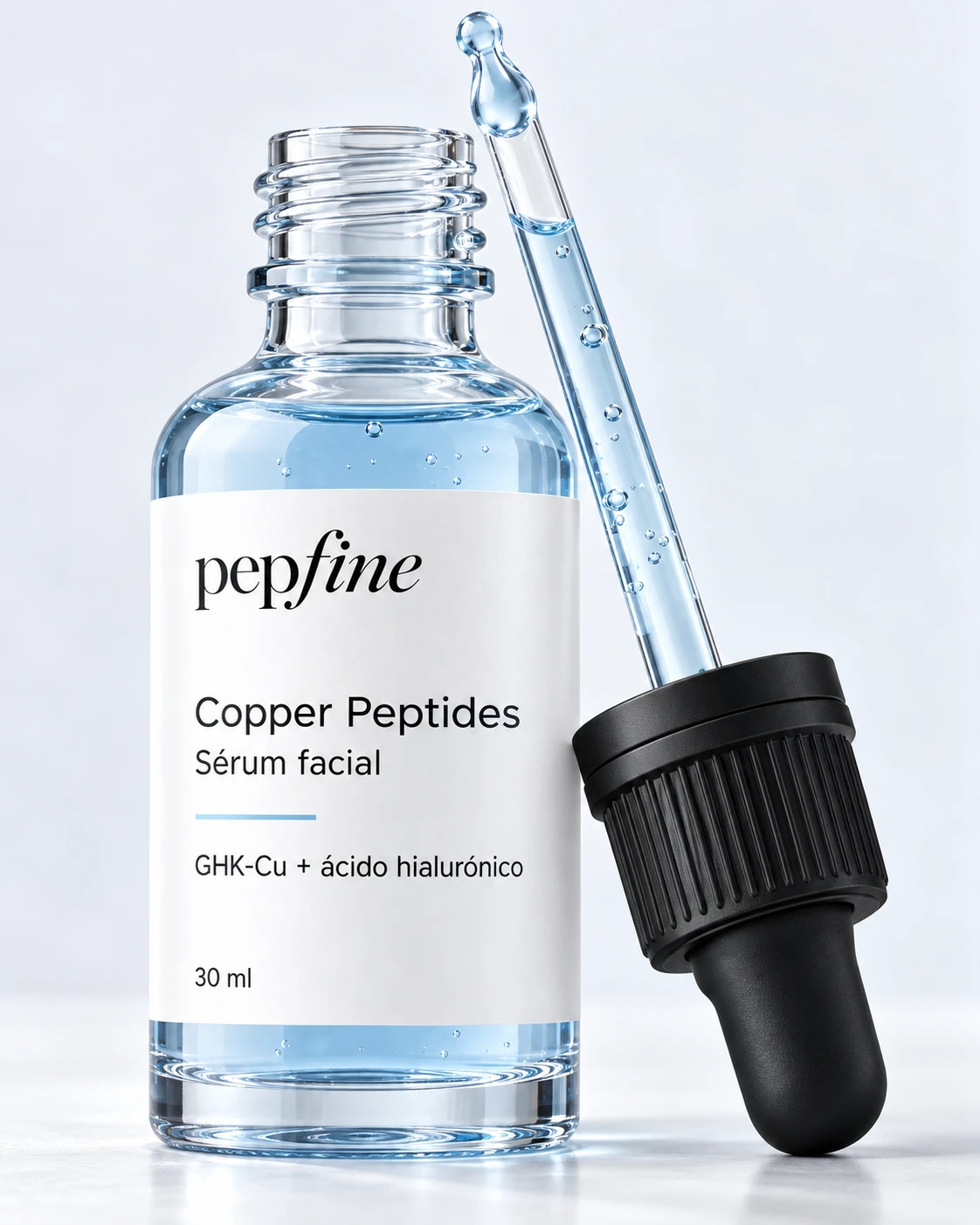
¿El Sérum Pepfine lleva ácidos?
No. Lleva péptido de cobre (GHK-Cu) y ácido hialurónico, sin ácidos exfoliantes. El ácido hialurónico se llama «ácido», pero no exfolia.

 ✦✦✧✦