

Key takeaways
- Niacinamide and peptides can be used in the same routine: both are usually well tolerated.
- Apply from lightest to richest and let each layer settle before the next.
- Keep copper peptide apart from exfoliating acids, retinol and pure vitamin C: use them at another time of day or on another night.
- Start one product at a time and patch test if your skin reacts easily.
Can niacinamide and peptides be combined? Yes. They're two of the most searched-for ingredients for more even, rested-looking skin, and the question comes up a lot: do they cancel each other out if I use them together? The short answer is no. They're usually well tolerated and fit in the same routine, as long as you mind the order and don't stack them with too many actives at once.
In this guide we explain what each one brings, where the idea that they don't mix comes from, what order to apply them in, which products to keep apart and how to build a simple morning and night routine.
What each one does
Niacinamide is a form of vitamin B3. In skincare it's used to help tone look more even, texture smoother and skin more comfortable. A 2024 review describes it as very well tolerated by the skin and explains that it supports the production of ceramides, fats that are part of the skin barrier.1
Peptides are short chains of amino acids. There are several types, and copper peptide (GHK-Cu) is one of the best known: it's classed as a carrier peptide, because it carries copper to the skin. In the cosmetic literature it has been used to improve the look of fine lines and uneven tone linked to sun exposure.2
Why they complement each other
Each one works its own way: niacinamide focuses more on the barrier and on tone, and peptides on the look of firmness and smoothness. That's why it makes sense to use them in the same routine instead of picking just one.
Why do people say they don't mix?
Many "this doesn't go with that" rules come from old formulas or from tests under conditions very different from today's serums, and then get repeated on social media without context. With niacinamide and peptides there's no clear reason to keep them apart: both are gentle and are used together in many routines.
Where you do want to be careful is combining copper peptide with strong exfoliating acids, retinol or pure vitamin C at the same time. It isn't dangerous, but skin can get irritated and it's harder to tell which product doesn't suit you. Better to split them between morning and night, or across different nights.
What order to apply them in
- Wash your face with lukewarm water and a gentle cleanser, using your fingertips.
- Pat dry, without rubbing.
- Apply the most watery product first, which is usually the peptide serum.
- Then the niacinamide if it's thicker or creamier.
- Finish with moisturizer and, during the day, sunscreen.
The American Academy of Dermatology recommends a gentle, alcohol-free cleanser, lukewarm water and applying it with your fingertips, because scrubbing irritates the skin. With a base like that, your actives are less likely to sting.3
If your niacinamide is lighter
There's no fixed rule about which goes first: let texture guide you. If your niacinamide is a very light liquid and your peptide serum is denser, swap the order. Wait a few seconds between layers so each one settles.
A simple morning and night routine
Morning
- Gentle cleanser.
- Peptide serum.
- Niacinamide.
- Moisturizer and sunscreen.
Night
- Gentle cleanser.
- Peptide serum.
- Niacinamide, if you like using it twice a day.
- Moisturizer.
If you use exfoliating acids or retinol, keep those nights free of copper peptide: cleanser, that night's active and moisturizer. That way each product has its own space and your skin gets a rest.
How to start without irritating your skin
If both products are new to you, don't start them on the same day. Begin with one, use it for a few days and, if your skin feels comfortable, add the other. That way, if something doesn't agree with you, you know which one it was.
Niacinamide is usually formulated at up to 5%, although some products go up to 10%. According to a 2024 review, below 5% it's usually well tolerated, with few and mild side effects such as some irritation, redness or itching. A higher percentage isn't always better, especially if your skin is sensitive.2
If your skin reacts easily, do a patch test before using either one on your whole face: a few drops on a small area, like behind the ear or along the jawline, and wait 24 hours.
Signs you're overdoing it
- Burning or itching that doesn't fade after a short while.
- New tightness or flaking.
- Redness that shows up after starting a product.
- A feeling that everything stings, even your usual cream.
If it happens, go back to basics for a few days: gentle cleanser, moisturizer and sunscreen. When your skin feels comfortable, reintroduce one product at a time. If the discomfort is strong or doesn't go away, stop and see a dermatologist.
Other ingredients that add up
- Hyaluronic acid: adds hydration and works with both.
- Ceramides: support the barrier, useful if you use actives daily.
- Panthenol: helps skin feel softer and more comfortable.
- Sunscreen: key for an even-looking tone.
What helps most isn't adding steps, but being consistent with a few. A short routine you use every day usually works better than a long one you give up on.
Frequently asked questions
What goes first, niacinamide or peptides?
Whichever has the lighter texture. Often it's the peptide serum, but if your niacinamide is more liquid, apply it first.
Can I use both if I have sensitive skin?
Yes, introducing one first for a few days and then the other. Choose moderate niacinamide concentrations and patch test if your skin reacts easily.
Can I combine niacinamide, peptides and vitamin C?
Yes, but not all at once. A simple option is to keep vitamin C for the morning and copper peptide for the night, with niacinamide whenever it's most comfortable for you.
Does the Pepfine Serum contain niacinamide?
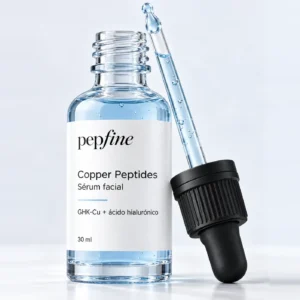
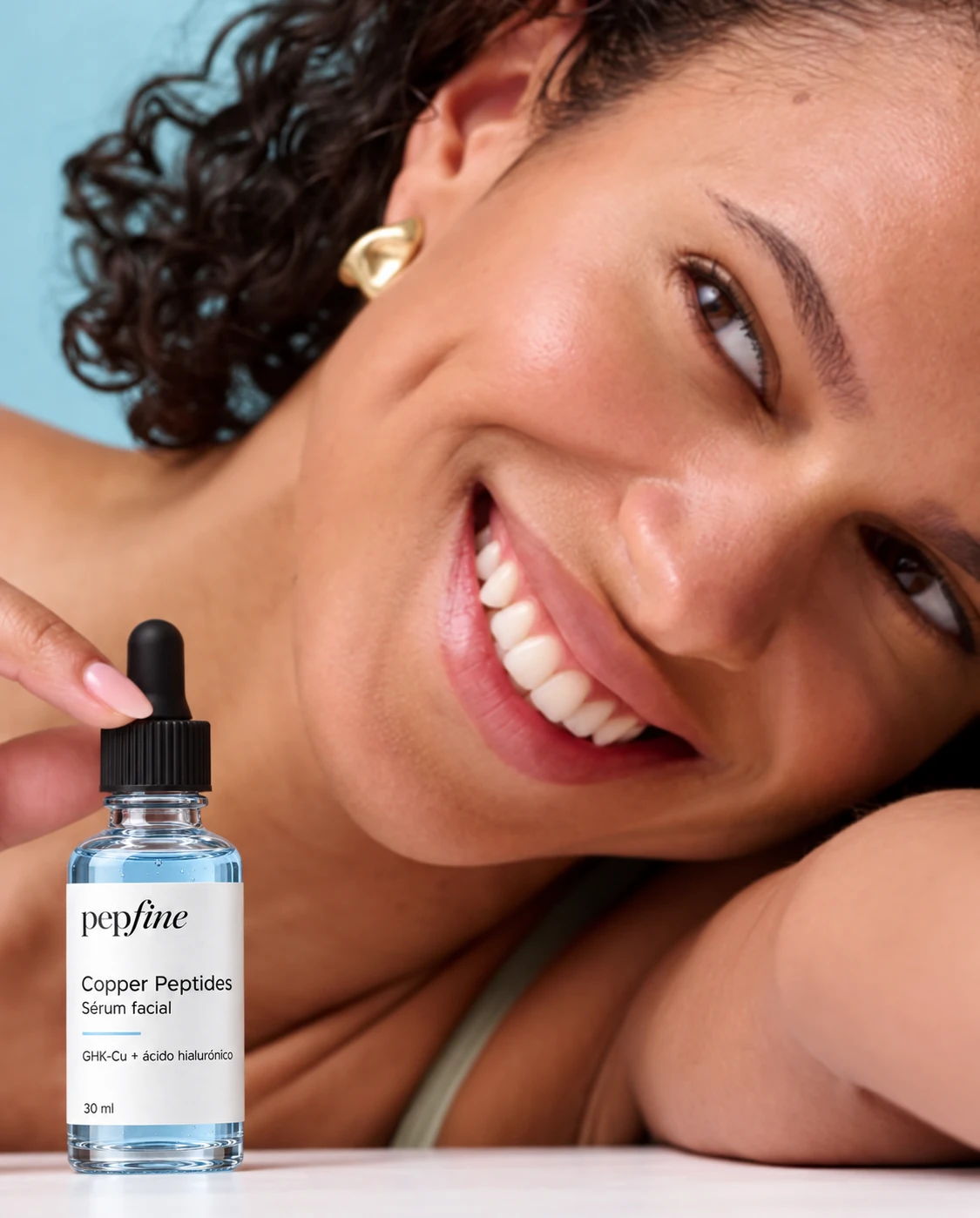
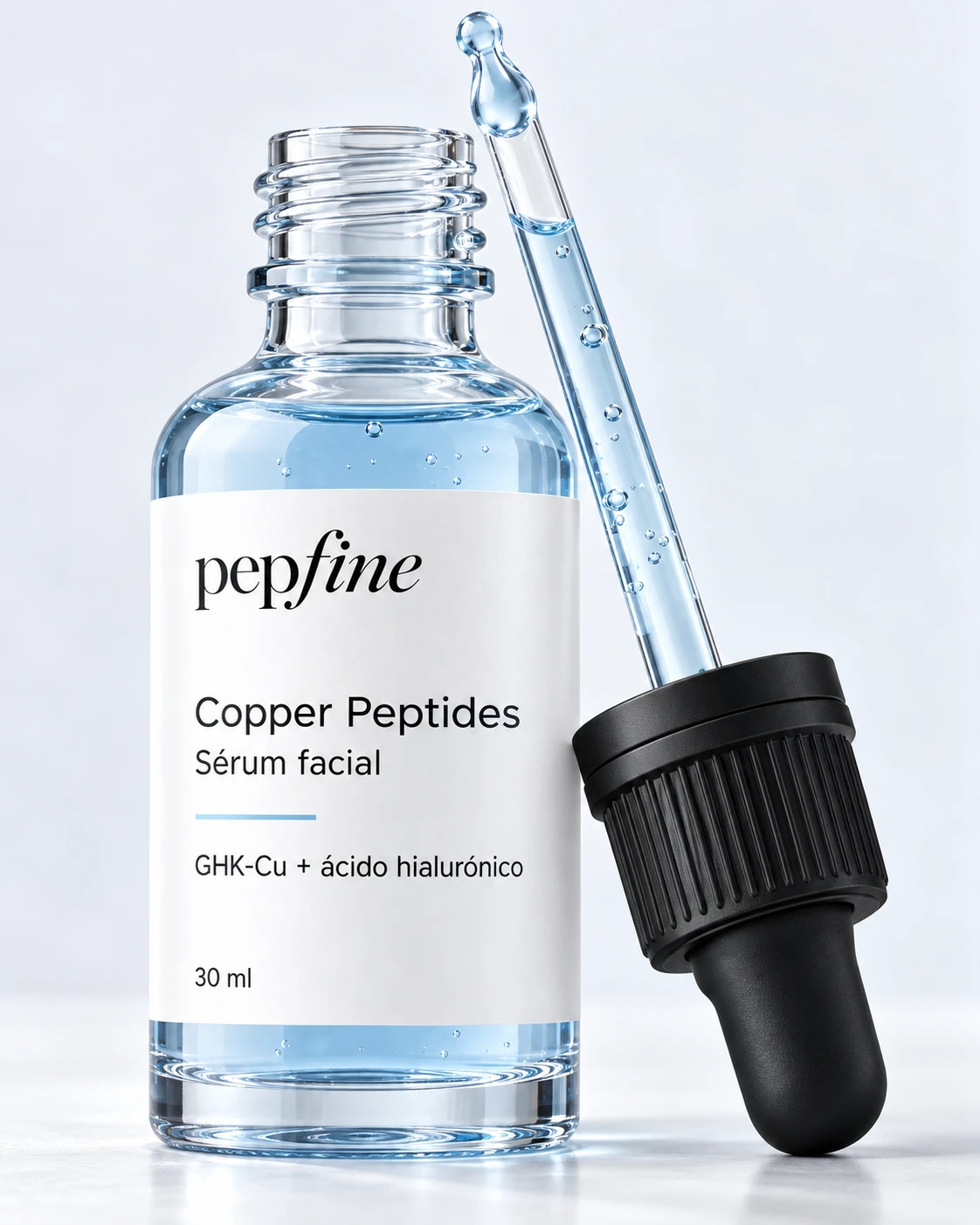
No. It contains copper peptide (GHK-Cu) and hyaluronic acid, with no exfoliating acids. If you already use niacinamide, you can apply it after the serum and before your moisturizer.
Sources
- Mechanistic Insights into the Multiple Functions of Niacinamide: Therapeutic Implications and Cosmeceutical Applications in Functional Skincare Products — Antioxidants, PMC (2024)
- Overview of popular cosmeceuticals in dermatology — Skin Health and Disease, PMC (2024)
- Face washing 101 — American Academy of Dermatology


 ✦✦✧✦